
When OpenAI launched Sora AI, it quickly became one of the most talked-about innovations in artificial intelligence. The tool could generate realistic videos from simple text prompts something that felt almost futuristic.
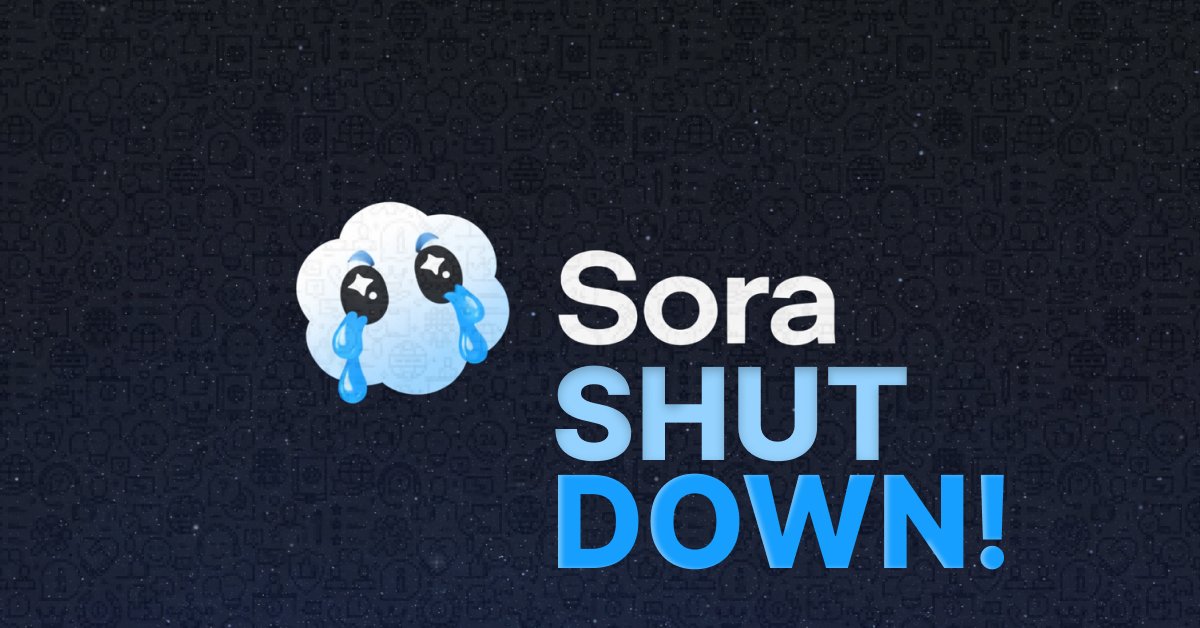
However, in a surprising move, OpenAI officially discontinued Sora in March 2026, just months after its public release.
So why would a company shut down such a powerful and hyped product?
Let’s break it down in simple terms.
1. Declining User Interest
Sora started strong, gaining millions of downloads within weeks. But that momentum didn’t last.
Downloads dropped significantly within months
User engagement declined rapidly
Many users stopped using the app after initial excitement
Reports show downloads fell from millions to nearly one-third in just a few months.
👉 In simple terms: People were impressed… but didn’t stick around.
2. High Cost of Running Sora
AI video generation is extremely expensive.
Requires massive computing power
High server and GPU costs
Scaling the product became unsustainable
Some estimates suggest OpenAI was spending billions yearly to maintain Sora.
👉 Translation: The product was too expensive to keep running long-term.
3. Legal & Copyright Problems
Sora faced serious legal challenges:
Generated content using copyrighted material
Risk of lawsuits from creators and companies
Concerns from partners like Disney
AI-generated videos sometimes included recognizable characters or styles, raising major copyright issues.
👉 Bottom line: Too risky legally.
4. Misuse & Safety Concerns
Another major issue was how people used Sora:
Deepfake-style videos
Non-consensual or misleading content
Difficulty moderating harmful outputs
There were growing concerns about fake videos and misinformation, which made the platform harder to control.
👉 This made Sora a potential trust problem for the internet.
5. Weak Long-Term Business Value
Despite its hype, Sora had a major problem:
➡️ It wasn’t solving a strong everyday need.
More entertainment than utility
Limited real-world applications
Hard to monetize effectively
Analysts noted that AI video apps still struggle with practical usefulness and engagement.
6. OpenAI’s Bigger Strategy Shift
The biggest reason? Focus.
OpenAI is now prioritizing:
ChatGPT ecosystem
Coding tools like Codex
AI “super app” vision
Robotics and world simulation
Sora’s team is even being redirected to robotics research and advanced AI systems.
👉 Translation: They chose long-term impact over short-term hype.
7. Partnership Fallout (Disney Deal)
Sora was part of a $1 billion partnership with Disney, but the shutdown ended that deal.
This shows how serious OpenAI was about pivoting even at the cost of huge partnerships.
Final Thoughts
Sora AI wasn’t a failure it was an experiment.
It proved that:
AI can generate realistic videos
The future of content creation is changing
But it also revealed:
The tech is still expensive
Legal risks are huge
People still prefer human-created content
👉 In short:
Sora was ahead of its time but not ready for the real world yet.
What’s Next?
OpenAI is now focusing on building a more powerful, all-in-one AI ecosystem instead of standalone tools like Sora.
So while Sora is gone, its technology will likely live on in future AI products.